
A cracked, broken, or severely decayed tooth can affect everything. It can make chewing uncomfortable, cause sensitivity to hot and cold, and even make you self-conscious about your smile.
A dental crown is often the best solution. It restores your tooth’s strength, protects it from further damage, and looks completely natural.
At North Dental Professionals, Dr. Paul Chaiken has placed thousands of dental crowns over his 30+ years of practice. He is meticulous about fit, color, and bite because a crown that doesn’t feel right won’t last. Our restorative dentistry serves patients at both our Chicago office (5953 N Milwaukee Avenue in Jefferson Park) and our Skokie office (4905 Old Orchard Shopping Center). Whether you need a crown to repair a broken tooth or restore a tooth after root canal treatment, we’re here to help.
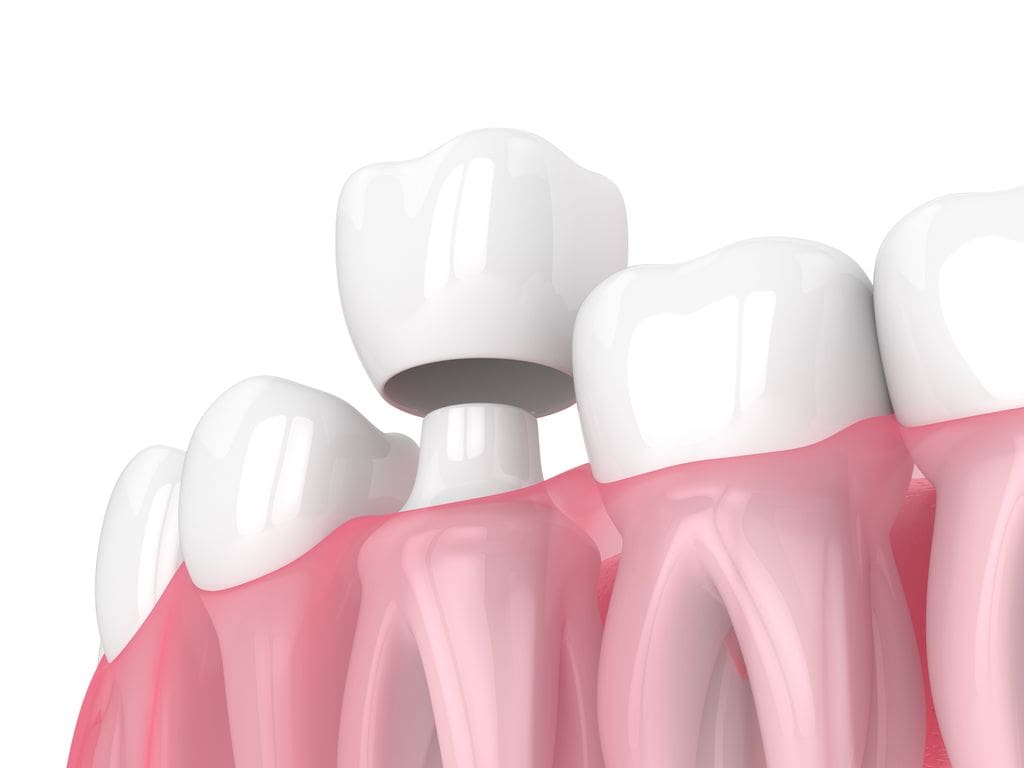
Signs You May Need a Dental Crown
Dr. Chaiken may recommend a crown in these situations:
- Large Cavities: When a tooth has more decay than healthy structure left, a filling won’t hold. A crown covers and protects what remains.
- Cracked or Broken Teeth: Accidents, grinding, or biting into something hard can crack a tooth. A crown holds the pieces together and prevents the crack from spreading.
- After Root Canal Therapy: Root canal-treated teeth become brittle and prone to fracture. A crown protects them so you can chew normally.
- Severely Worn Teeth: Grinding (bruxism) or acid erosion can flatten teeth. Crowns rebuild them to their proper shape and height, improving your bite.
- Cosmetic Enhancement: Crowns can transform severely stained, misshapen, or poorly positioned teeth.
Types of Dental Crowns: Materials, Durability, and Cost
Different situations call for different crown materials. Dr. Chaiken will help you choose based on which tooth needs the crown, your aesthetic goals, and your budget.
Porcelain and Ceramic Crowns
These are the most popular choices for front teeth and other visible areas. Porcelain and ceramic reflect light just like natural tooth enamel, creating a beautiful, lifelike appearance. We match these crowns precisely to the color of your surrounding teeth.
- Best for: Front teeth (visible areas)
- Durability: 10-15 years
- Aesthetics: Excellent; matches natural tooth color
- Typical cost range (per crown, before insurance): 1,000−2,500*
Porcelain-Fused-to-Metal Crowns
These crowns combine the strength of a metal base with the natural look of a porcelain coating. They are quite durable, but the metal underneath can sometimes show as a dark line at the gumline, especially if your gums recede over time.
- Best for: Front or back teeth
- Durability: 10-15 years
- Aesthetics: Good; metal can sometimes show at the gumline
- Typical cost range (per crown, before insurance): 800−1,800*
Gold and Metal Alloy Crowns
Gold alloy and other metal crowns are extremely durable and work best for back molars that handle heavy chewing forces. They rarely chip or break and require less removal of your natural tooth structure. The main drawback is their noticeable appearance.
- Best for: Back molars (high chewing force)
- Durability: 15-20+ years
- Aesthetics: Poor (very noticeable)
- Typical cost range (per crown, before insurance): 800−1,500*
Zirconia Crowns
Zirconia is a newer, highly durable ceramic material that offers excellent aesthetics and strength. These crowns are metal-free, biocompatible, and resistant to chipping and cracking. They have become increasingly popular for both front and back teeth.
- Best for: Any tooth; especially strong for back teeth
- Durability: 15-20+ years
- Aesthetics: Excellent; strong and natural-looking
- Typical cost range (per crown, before insurance): 1,200−2,500*
*Note: These are estimated ranges. Your final cost depends on your specific case, insurance coverage, and any preparatory work needed (such as a root canal or core buildup). We will provide a clear estimate before any treatment begins.
Which crown is right for you? Dr. Chaiken typically recommends all-ceramic or zirconia crowns for front teeth because of their natural appearance. For back molars that take the most chewing force, he may recommend zirconia or gold for maximum durability. He will explain the pros and cons of each option during your consultation.
Patient Review
The Dental Crown Process: From Consultation to Final Placement
Getting a crown typically requires two appointments. Here’s what to expect, including how we manage pain and ensure your comfort.
First Appointment: Examination and Tooth Preparation (Approx. 60-90 minutes)
Step 1: Examination and X-rays
Dr. Chaiken examines your tooth and takes digital X-rays to check the roots and surrounding bone. If decay extends into the nerve, you may need a root canal before the crown.
Step 2: Numbing the Area
We use a local anesthetic to completely numb your tooth and the surrounding gum tissue. Most patients feel a small pinch from the injection, then no pain during the procedure. If you have dental anxiety, we offer nitrous oxide (laughing gas) to help you relax. For more complex cases, we offer oral sedation.
Step 3: Reshaping the Tooth
Dr. Chaiken gently files down the outer layers of your tooth to make room for the crown. The amount removed (typically 1-2 millimeters) matches the crown’s thickness.
Step 4: Building Up the Core (If Needed)
If a significant portion of your tooth is missing, Dr. Chaiken will use filling material to build up a solid foundation for the crown.
Step 5: Taking Impressions
We take detailed digital or physical impressions of your prepared tooth and the surrounding teeth. We send these impressions to our trusted dental lab. Skilled technicians will craft your custom crown to match the exact shape, size, and color Dr. Chaiken specifies.
Step 6: Placing a Temporary Crown
While we fabricate your permanent crown (typically 2-3 weeks), we place a temporary crown over your prepared tooth. This temporary:
- Protects the tooth from sensitivity and damage
- Maintains the space for your permanent crown
- Allows you to eat and speak normally (though we recommend avoiding very sticky or hard foods)
Waiting Period: Your Crown Is Fabricated (2-3 Weeks)
During this time, our dental lab creates your custom crown. We use only high-quality materials from trusted U.S.-based labs. Once the crown is ready, we will call you to schedule your second appointment.
Second Appointment: Crown Placement (Approx. 30-45 minutes)
Step 1: Removing the Temporary Crown
Dr. Chaiken gently removes your temporary crown. This is a painless process.
Step 2: Testing the Fit and Color
He places the permanent crown on your tooth to check the fit, bite, and color. He will ask you to bite down and move your jaw side to side to ensure the crown doesn’t interfere with your natural bite. If any adjustments are needed, he makes them right then.
Step 3: Cementing the Crown
Once the fit is perfect, Dr. Chaiken permanently cements the crown onto your tooth. The cement bonds the crown securely, and you are ready to go.
Step 4: Final Polishing and Instructions
He polishes the crown to match the sheen of your natural teeth and reviews care instructions. You can eat and drink normally once the anesthetic wears off.
How We Manage Pain and Anxiety
We understand that dental procedures can cause anxiety. Here is how we keep you comfortable:
- Local anesthesia numbs the area completely. Most patients feel no pain during the procedure.
- Nitrous oxide (laughing gas) helps you relax while remaining fully awake. It wears off quickly, so you can drive yourself home.
- Oral sedation is available for patients with moderate to severe anxiety. You will need a driver for this option.
- Gentle injection technique: We use a topical numbing gel before the injection, so you barely feel the needle.
- We go at your pace: Need a break? Just raise your hand. We stop immediately.
Most patients report mild gum soreness for a few days after the procedure, but this typically resolves with over-the-counter pain relievers like ibuprofen.
Same-Day Crowns: Do We Offer Them?
We don’t currently offer same-day crowns (CEREC). Instead, we use a two-appointment system with a temporary crown and a permanent crown fabricated by a trusted dental lab. While same-day crowns offer convenience, traditional lab-fabricated crowns have advantages:
- Superior aesthetics: Lab technicians can layer porcelain to match natural tooth translucency better than in-office milling.
- Proven durability: Traditional crowns have decades of success data.
- More material options: We can offer all-ceramic, zirconia, porcelain-fused-to-metal, and gold crowns.
If you are looking for a same-day crown, we can discuss your options and refer you to the appropriate provider. For most patients, the traditional two-appointment crown provides the best balance of quality, durability, and aesthetics.
Dental Crown FAQs
How long does a dental crown last?
With proper care, crowns last 10 to 15 years on average. Gold and zirconia crowns can last 20 years or longer. The tooth underneath the crown can still develop decay if you do not brush and floss properly, which can shorten the crown’s lifespan.
Does getting a dental crown hurt?
The procedure itself isn’t painful because we numb the area completely. You may feel pressure or vibration during tooth preparation, but not pain. After the anesthetic wears off, you may have mild gum soreness for a few days. Most patients manage this with over-the-counter pain relievers.
Does insurance cover dental crowns?
Most dental insurance plans cover a portion of the cost of a crown when it’s medically necessary (e.g., to restore a broken or decayed tooth). Coverage typically ranges from 50% to 80% of the cost after your deductible. We will verify your benefits and provide a written estimate before any treatment begins.
Can a crown fall off?
While rare, crowns can loosen or fall off if the cement weakens or if decay develops underneath. If your crown comes off, save it and call us immediately. Don’t try to glue it back on yourself. We can often re-cement the same crown if it’s intact.
How do I care for my crown?
Brush twice daily with a soft-bristled toothbrush. Floss daily around the crown because the tooth beneath it can still develop cavities. Avoid biting hard items like ice, hard candy, or nutshells. If you grind your teeth at night, ask Dr. Chaiken about a custom night guard to protect your crown and natural teeth. Continue seeing us every six months for checkups and cleanings.
What is the difference between a crown and a veneer?
A crown covers your entire tooth above the gum line. A veneer only covers the front surface of the tooth. Crowns are for teeth that need structural reinforcement (e.g., cracks, large cavities, or root canal treatment). Veneers are for cosmetic improvements (stains, small chips, minor gaps) on otherwise healthy teeth.
Why Choose North Dental Professionals for Your Dental Crown?
- 30+ years of experience. Dr. Chaiken has placed thousands of crowns. He has the expertise to handle both simple and complex cases.
- Assistant clinical professor at Northwestern. Dr. Chaiken teaches restorative dentistry at Northwestern University School of Medicine. This keeps him at the forefront of techniques and materials.
- Meticulous attention to fit and bite. A crown that doesn’t fit perfectly can cause jaw pain, headaches, and premature failure. Dr. Chaiken adjusts each crown until the fit is absolutely right.
- High-quality materials from trusted labs. We work with U.S.-based dental labs known for their craftsmanship. Your crown will look natural and last for years.
- Anxiety-free sedation options. Nervous about dental work? We offer nitrous oxide and oral sedation to help you relax.
- Convenient Chicago and Skokie locations. Two offices serving the entire North Side and North Suburbs. Our Chicago office is conveniently located at 5953 N Milwaukee Avenue in Jefferson Park, with free parking in our lot. Our Skokie office is located at 4905 Old Orchard Shopping Center, Suite 535, near the border with Evanston.
Schedule Your Dental Crown Consultation Today
Don’t wait to fix a cracked, broken, or decayed tooth. A dental crown can restore your ability to chew comfortably and smile with confidence. We welcome patients from Edison Park, Norwood Park, Jefferson Park, Forest Glen, Park Ridge, Niles, Morton Grove, Glenview, and Wilmette. Patients from all North Shore communities and across Chicago are welcome.
Call our Chicago office at 708-274-4192 or our Skokie office at 224-267-8083. You can also request an appointment online. Dr. Paul Chaiken and the team at North Dental Professionals look forward to helping you restore your smile.