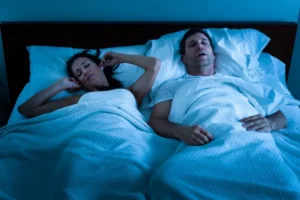
When people think of sleep apnea, they usually think of loud snoring. And while snoring is a common sign, it’s far from the whole story. If you wake up tired every morning. If you get headaches during the day. Or if you find yourself nodding off at your desk or while watching TV at night. These could be signs of sleep apnea.
At our Chicago dental office, Dr. Paul Chaiken offers a simple, effective solution that doesn’t require a bulky machine or surgery. It’s called oral appliance therapy, and it’s changing the way many Chicagoans sleep.
What Exactly Is Sleep Apnea?
Sleep apnea is a condition where your breathing stops and starts throughout the night. The most common type happens when your throat muscles relax too much and block your airway. You might stop breathing for ten seconds, twenty seconds, or even longer. Your brain wakes you up just enough to start breathing again.
This can happen dozens or even hundreds of times per night. Most people don’t remember waking up. But their bodies feel the effects.
Common symptoms include:
- Loud, persistent snoring
- Gasping or choking sounds during sleep
- Morning headaches
- Dry mouth or sore throat upon waking
- Daytime fatigue and brain fog
- Irritability or mood changes
Why Dentists Can Help with Sleep Apnea
You might wonder why a dentist is talking about sleep. Here’s the connection: your jaw and airway are closely linked.
Dr. Chaiken has extensive training in treating bite problems and TMJ disorders, which gives him a deep understanding of how your jaw position affects your airway. When your jaw sits too far back, it can narrow your airway and make breathing harder while you sleep.
An oral appliance works by gently holding your lower jaw forward just a bit. This small change keeps your airway open so you can breathe normally all night long.
How Oral Appliance Therapy Works
The process at our Chicago office is straightforward.
First, we’ll talk about your symptoms and medical history. If sleep apnea seems likely, we may recommend a sleep test. This can often be done at home with a simple monitor.
Once sleep apnea is confirmed, Dr. Chaiken will take impressions of your teeth and create a custom oral appliance just for you. It looks similar to a sports mouthguard or an Invisalign aligner. It’s small, comfortable, and easy to travel with.
You wear the appliance only while you sleep. Most patients adjust to it within a few nights.
Why Choose an Oral Appliance Over a CPAP Machine?
The standard treatment for sleep apnea is a CPAP machine, which uses a mask and hose to push air into your airway while you sleep. It works well for many people. But it’s noisy, uncomfortable, and hard to travel with.
Studies show that about half of CPAP users stop using their machines within a year.
Oral appliances are different. They’re quiet. They’re portable. You don’t need electricity. And because they’re custom-made for your mouth, they’re comfortable to wear.
For mild to moderate sleep apnea, oral appliance therapy is often the preferred treatment. Even for severe cases, many patients use an oral appliance alongside their CPAP to reduce pressure settings and improve comfort.
Better Sleep Changes Everything
Getting your sleep apnea treated doesn’t just help you snore less. It could lower your blood pressure, reduce your risk of heart problems, improve your memory, and give you real energy during the day.
Patients tell us they feel like different people after just a few weeks of treatment. More awake. More patient. And more present with their families.
Ready to Sleep Better?
If you live in Chicago and suspect sleep apnea might be keeping you from restful sleep, you don’t have to live with it. Come see us at our Chicago office. We’ll listen to your concerns, explain your options, and help you find a solution that fits your life.